
Your Best Resource for Exploring Greater Toronto Property Market
Backed by market expertise and modern strategies, Macedo Real Estate Group delivers a personalized real estate experience with deep local knowledge.
Our dedicated agents help clients find their place in the world with integrity, discretion and a focus on results.

Macedo Real Estate Group: Elevating Luxury Real
Estate Experiences
━━━━━━━━
Since 1996, Macedo Real Estate Group at Royal LePage® Supreme Realty Brokerage, has been a trusted leader in luxury real estate, guiding discerning buyers and sellers through every phase of the property journey. With a wealth of expertise honed over three decades, Danny and his team combine deep market insight with an unwavering commitment to delivering a seamless, personalized experience.
What Are You Looking To Do in Toronto?
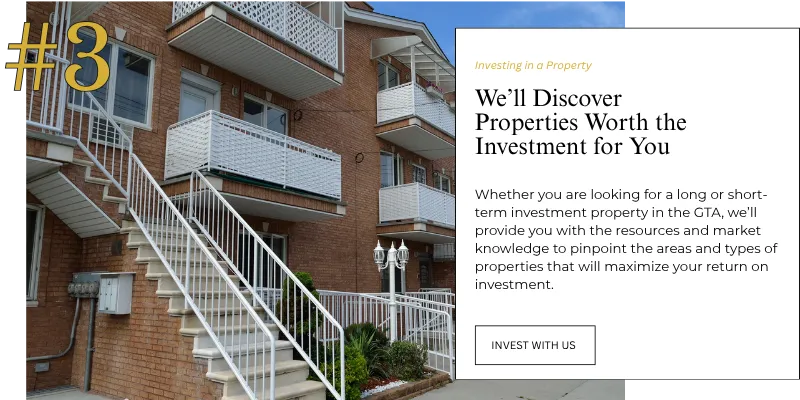



Local Knowledge. Connected Reach.
Our team knows your neighborhood inside and out, providing guidance you can trust at every step of your real estate journey. We take the time to understand your goals, whether you’re looking to buy your first home, sell your current property, or find your next investment. Using targeted marketing strategies, professional photography, and the latest digital tools, we ensure your property stands out in the market and reaches the right buyers. With a network of connections and a commitment to clear communication, we handle the details so you can move forward with confidence, knowing your home is in the hands of local experts who care about your success.
Remarkable Homes, Inspired Living
At Macedo Real Estate Group, we believe where you live shapes how you live. That’s why we carefully match clients with homes that fit their lifestyle, whether you’re seeking city energy, quiet neighborhood streets, or a place to grow your dreams. Our team pairs local expertise with personalized guidance, helping you find not just a property, but a space that reflects who you are and how you want to live.


The Deposit Clock: What Happens in the First 24 Hours After Your Offer Is Accepted
Nobody celebrates for very long.
The offer gets accepted, there is about ninety seconds of relief, and then somebody in the room asks the question that actually matters. When is the money due, and where is it coming from?
This is the part of buying a home that almost nobody explains in advance, and it is the part that produces the most avoidable panic. So here it is in advance.
What the agreement usually says
The standard Ontario Real Estate Association agreement of purchase and sale, the form used in most residential transactions in this province, generally requires the deposit to be delivered within 24 hours of the offer being accepted, unless the agreement itself specifies something different.
Three details inside that sentence cause all the trouble.
It says 24 hours, not one business day. If your offer is accepted at eleven o'clock on a Saturday morning, the deposit is due by eleven o'clock on Sunday morning. Banks are shut. That is not a loophole, that is the clock.
Time is of the essence. That phrase appears in the agreement and it means what it sounds like. Deadlines are not approximate. A seller has remedies if the deposit is late, and in the worst case that can include treating the agreement as at an end.
The form of payment is restricted. A deposit is normally delivered by bank draft or certified cheque to the listing brokerage's trust account. An electronic transfer from your phone at midnight is not the same thing, and a personal cheque is usually not accepted.
An illustrative example
The following is an illustrative example. It is not a real client, and it is included only to show how the sequence plays out.
A couple see a house on the Thursday. They love it. Their agent tells them offers are being reviewed on the Saturday. They spend Friday getting their financing lined up, which is the right instinct, and Saturday afternoon their offer is accepted at 4pm.
Their deposit is due by 4pm Sunday. Their money is sitting in a savings account at a branch that opens Monday at half past nine. They spend Saturday evening on hold with a call centre, Sunday morning driving to an airport branch, and the entire first day of owning their new home in a state of quiet terror.
Nothing went wrong in the end. But nothing needed to be that unpleasant either, and every part of it was foreseeable on the Thursday.
The four things that prevent it
None of these are clever. They are just done in advance rather than afterwards.
- Move the deposit money before you write the offer. Not when you find the house. Before. It should be sitting in a chequing account at a branch you can physically walk into, in the name of the person who will sign the agreement.
- Find out your branch's hours, including Saturday. Write them down. Some branches open Saturday morning and some do not, and you want to know which yours is before you need to know.
- Ask your agent to negotiate the deposit timing into the offer. The 24 hour default is not compulsory. An agreement can specify a different deadline, for example by six o'clock on the following Monday. If your offer is going in on a Friday or Saturday, this is worth raising before the offer is submitted, not after.
- Confirm where the draft is going. The listing brokerage's name, the trust account, and who to hand it to. Get that in writing from your agent when the offer is accepted, not while you are standing at a teller.
Two questions worth asking your agent before you write anything
Ask both. The answers tell you a great deal about how the rest of the transaction will be handled.
- What deposit amount will make my offer credible in this specific competition, and what is that based on?
- If we are accepted late on a Friday or a Saturday, what exactly is the plan for delivering the deposit?
An agent who has thought about this will answer the second one immediately. An agent who has not will tell you it usually works out.
It usually does work out. That is not the same as it being handled.
One thing to keep in perspective
Your deposit is not an extra cost. It forms part of your down payment and is credited to you on closing. What it buys you in the meantime is credibility, because it is the clearest signal a buyer can send that they intend to complete.
Which is exactly why being unable to produce it on time is such an expensive way to start.
Before you write your first offer
If you are close to buying and you have not yet worked out where your deposit is sitting or how quickly you can reach it, text me at 647-931-5151. It is a ten minute conversation and it removes the single most common source of panic in the first week.
Danny Macedo, Macedo Real Estate Group, Royal LePage Supreme Realty, Brokerage. Selling in Toronto and York Region since 1996.
This article is general information about how residential transactions are commonly structured in Ontario. It is not legal advice, and the terms of your own agreement of purchase and sale always take precedence. Ask your lawyer or your agent about your specific contract.

Royal LePage® Supreme Realty, Brokerage
110 Weston Road
Toronto, ON M6N 0A6
Call 416-535-8000
Text 647-931-5151


Copyright 2026. Macedo Real Estate Group, Danny Macedo, Sales Representative, Anthony Rocco Macedo, Sales Representative, Royal LePage Supreme Realty, Brokerage all rights reserved assumes no responsibility for the accuracy of any information shown. The information provided herein must only be used by consumers that have a bona fide interest in the purchase, sale or lease of real estate and may not be used for any commercial purpose or any other purpose.