
BUYER RESOURCES
Free Home Buyer Tools to help GTA home buyers get organized, compare properties,
understand the market and move forward with confidence.



STILL NOT SURE?
Frequently Asked Questions
Understanding the process to purchasing a home in the Greater Toronto Area.
Question 1: How much can I afford when buying a home?
Your affordability depends on your income, savings, debts, credit score, down payment, interest rate, and monthly carrying costs. A mortgage pre-approval is one of the best first steps because it gives you a clearer budget before you start viewing homes.
Question 2: Do I need a mortgage pre-approval before looking at properties?
Yes, it’s strongly recommended. A pre-approval helps you understand your price range, shows sellers you’re a serious buyer, and can help you move faster when the right property becomes available..
Question 3: What costs should I expect besides the purchase price?
Buyers should budget for closing costs, land transfer tax, legal fees, title insurance, home inspection fees, moving costs, property insurance, and possible adjustments for taxes, utilities, or condo fees.
Question 4: What happens after my offer is accepted?
After acceptance, you’ll typically complete any conditions, such as financing or inspection, provide your deposit, we work with your lawyer and lender, arrange insurance, complete the final walkthrough, and prepare for closing day.
TESTIMONIALS
What others are saying
"Service Above Expectations"
"We got out of our house and purchased a home in the community where we wanted to be. I know many people that haven’t had that kind of success. Thanks again for everything!"
- Annette Campagnaro

"Client Care Delivered"
"We were first-time buyers, and Danny Macedo made the whole process feel manageable, even exciting. Anytime we panicked or had questions, Danny or someone on his team got back to us fast, and they alwa ys took the time to explain our options."
- Jenny Roberts
"Trusted Guidance Given"
"Danny’s pricing guidance was spot-on, and he explained the neighborhood comps in a way that actually made sense, so we listed confidently. The best part was the negotiation, because he created momentum with multiple offers, pushed terms that protected us."
- Mike Groves

Royal LePage® Supreme Realty, Brokerage
110 Weston Road
Toronto, ON M6N 0A6
Call 416-535-8000
Text 647-931-5151


Copyright 2026. Macedo Real Estate Group, Danny Macedo, Sales Representative, Anthony Rocco Macedo, Sales Representative, Royal LePage Supreme Realty, Brokerage all rights reserved assumes no responsibility for the accuracy of any information shown. The information provided herein must only be used by consumers that have a bona fide interest in the purchase, sale or lease of real estate and may not be used for any commercial purpose or any other purpose.
Elite Broker Blogs
━━━━━━━━
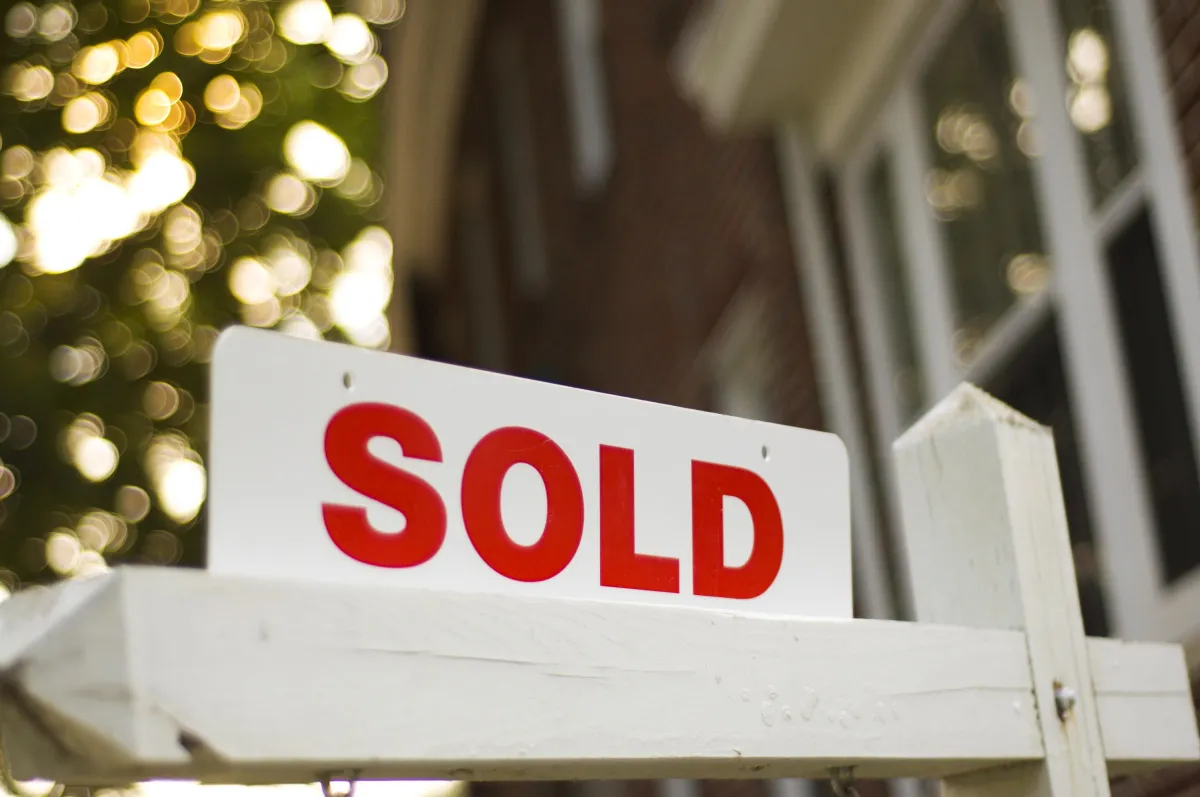
Your Listing Was Cancelled. That Is Information, Not a Verdict.
There is a particular silence that settles over a house that did not sell.
The sign comes down. The photographs stay up on the internet for a while, which is its own small humiliation. And the owners, who did nothing wrong, start to wonder whether there is something the matter with the home they have lived in happily for fifteen years.
There usually is not. I have been selling in this city since 1996, and in the overwhelming majority of cases a cancelled listing is not a verdict on the house. It is information about the launch.
A real example
One of my clients came to me after exactly this. Here is what he wrote afterwards, in his own words.
"Following the cancellation of that listing, we turned to Danny Macedo on the recommendation of a friend. Remarkably, within just three weeks of listing with Danny, we received an offer that met our expectations. The entire transaction proceeded smoothly, culminating in the early closure of the sale by one day!"
Mark Elliott, seller
Same house. Same city. Same owners. Different launch.
I am not telling that story to suggest there is magic involved. There is not. I am telling it because the gap between those two outcomes is made up of decisions, and decisions can be examined.
Start by separating the four possible causes
A home that does not sell has failed at one of four stages, and the fix is different at each. Work out which one before you change anything.
- Nobody saw it. Low view counts, few showings. This is a marketing and exposure problem.
- People saw it online but did not book. Views without showings. This is almost always photography, the first image, or the price bracket you appear in.
- People came and did not offer. Showings without offers. This is condition, presentation, or a mismatch between the price and what the buyer sees when they walk in.
- Offers came and did not close. This is negotiation or terms, and it is a different conversation entirely.
Most sellers assume they are in category three and reach straight for a price reduction. A good proportion are actually in category two, where cutting the price fixes nothing because the problem was that the first photograph did not make anybody want to see more.
Why the relaunch matters more than the relist
Here is something worth knowing about how the market reads a returning listing.
TRREB publishes two days-on-market figures. One counts from the most recent listing date, and one counts from when a property first came to market. When a listing is withdrawn and brought back, the first clock restarts. The second does not.
Across all TRREB areas in July 2026 those figures were 32 days and 45 days. A year earlier they were 30 days and 40 days. The first rose 6.7 per cent. The second rose 12.5 per cent.
What that gap tells you is that a meaningful share of the market is going around twice. You are not unusual. But it also tells you that a relaunch which changes nothing except the date is a relaunch that has learned nothing.
The checklist I would work through
Before your home goes back on, answer all of these in writing. If you cannot answer one, that is the one to work on.
- How many online views did the listing get, and how many turned into showings? What is the ratio?
- What was the feedback from the showings that did happen, in the words the buyers actually used?
- Which specific properties sold while mine sat? What did they have, and what did they go for?
- Is my first photograph the strongest image of this house, or simply the front of it?
- Does my price put me in a search bracket where my home is the best option, or the weakest one?
- What will we do differently on day one of the relaunch, and how will we know within two weeks whether it worked?
- If it has not worked by that point, what happens next, and on what date?
That last pair is the one sellers skip, and it is the one that protects you. Deciding in advance what happens at day fourteen is an entirely different exercise from deciding it on day fourteen, when you are tired and the decision feels like a defeat.
One thing not to do
Do not go straight back on at a slightly lower price the week after it comes down. If the launch was the problem, a small reduction simply confirms to the market that you are moving, and invites everyone to wait for the next one.
Take the time to answer the seven questions above. Then relaunch properly, once.
If your listing has just come down
Send me the address and the dates it was on the market. I will tell you honestly which of the four stages it failed at, and whether I think the house or the launch was the problem. If it was the house, I will say so.
Text me at 647-931-5151.
Danny Macedo, Macedo Real Estate Group, Royal LePage Supreme Realty, Brokerage. Selling in Toronto and York Region since 1996.
Market figures from the Toronto Regional Real Estate Board Market Watch report for July 2026. The testimonial above is a real client review, published with the reviewer's name as given.