BUYER RESOURCES
Free Home Buyer Tools to help GTA home buyers get organized, compare properties,
understand the market and move forward with confidence.
A MESSAGE FROM danny macedo
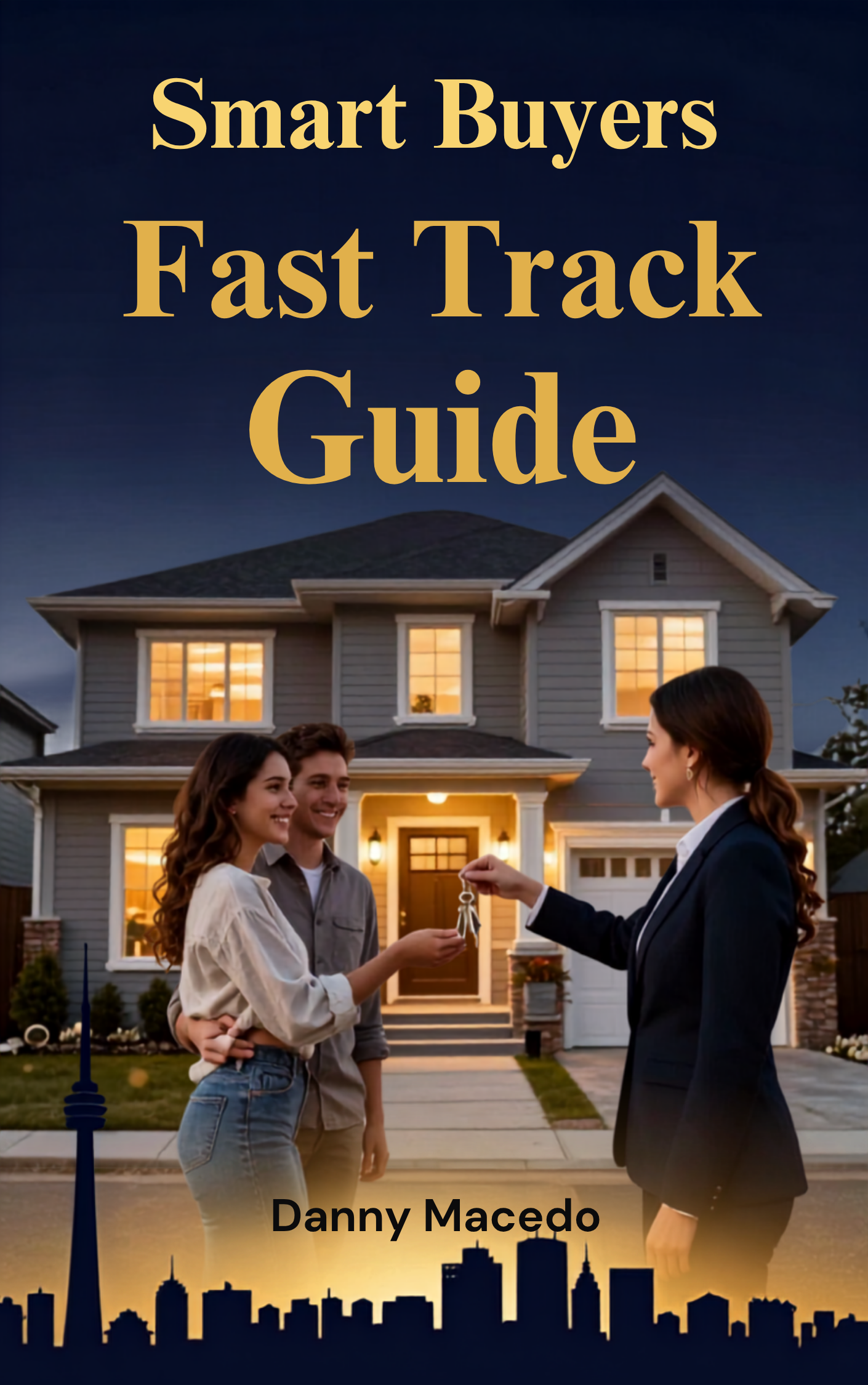
Why I Created This Guide
If you’re thinking about buying a home in the Greater Toronto Area, you’re looking at one of the best
opportunities in years. Prices are down from their 2022 peaks. Inventory is healthy. Sellers are negotiating. And for the first time in a long time, buyers have real leverage.
But here’s the catch: opportunity without strategy is just luck. The buyers who are winning in this market aren’t just showing up and making offers. They’re following a specific set of strategies that help them find the right home, avoid costly mistakes, and negotiate from a position of strength.
After 30 years of helping buyers across the GTA...from first-time purchasers in Toronto to families moving up to King City... I’ve seen every mistake and every winning move. This guide gives you the playbook my clients use to buy smarter, faster, and with confidence.
Understand Today's Market
Evaluate Properties Like a Pro
Your Home Buying Checklist

STILL NOT SURE?
Frequently Asked Questions
Understanding the process to purchasing a home in the Greater Toronto Area.
Question 1: How much can I afford when buying a home?
Your affordability depends on your income, savings, debts, credit score, down payment, interest rate, and monthly carrying costs. A mortgage pre-approval is one of the best first steps because it gives you a clearer budget before you start viewing homes.
Question 2: Do I need a mortgage pre-approval before looking at properties?
Yes, it’s strongly recommended. A pre-approval helps you understand your price range, shows sellers you’re a serious buyer, and can help you move faster when the right property becomes available..
Question 3: What costs should I expect besides the purchase price?
Buyers should budget for closing costs, land transfer tax, legal fees, title insurance, home inspection fees, moving costs, property insurance, and possible adjustments for taxes, utilities, or condo fees.
Question 4: What happens after my offer is accepted?
After acceptance, you’ll typically complete any conditions, such as financing or inspection, provide your deposit, we work with your lawyer and lender, arrange insurance, complete the final walkthrough, and prepare for closing day.
TESTIMONIALS
What others are saying
"Service Above Expectations"
"We got out of our house and purchased a home in the community where we wanted to be. I know many people that haven’t had that kind of success. Thanks again for everything!"
- Annette Campagnaro

"Client Care Delivered"
"We were first-time buyers, and Danny Macedo made the whole process feel manageable, even exciting. Anytime we panicked or had questions, Danny or someone on his team got back to us fast, and they alwa ys took the time to explain our options."
- Jenny Roberts
"Trusted Guidance Given"
"Danny’s pricing guidance was spot-on, and he explained the neighborhood comps in a way that actually made sense, so we listed confidently. The best part was the negotiation, because he created momentum with multiple offers, pushed terms that protected us."
- Mike Groves
Royal LePage® Supreme Realty, Brokerage
110 Weston Road
Toronto, ON M6N 0A6
Call 416-535-8000
Text 647-931-5151


Copyright 2026. Macedo Real Estate Group, Danny Macedo, Sales Representative, Anthony Rocco Macedo, Sales Representative, Royal LePage Supreme Realty, Brokerage all rights reserved assumes no responsibility for the accuracy of any information shown. The information provided herein must only be used by consumers that have a bona fide interest in the purchase, sale or lease of real estate and may not be used for any commercial purpose or any other purpose.
Elite Broker Blogs
━━━━━━━━
Choosing Between the 416 and the 905
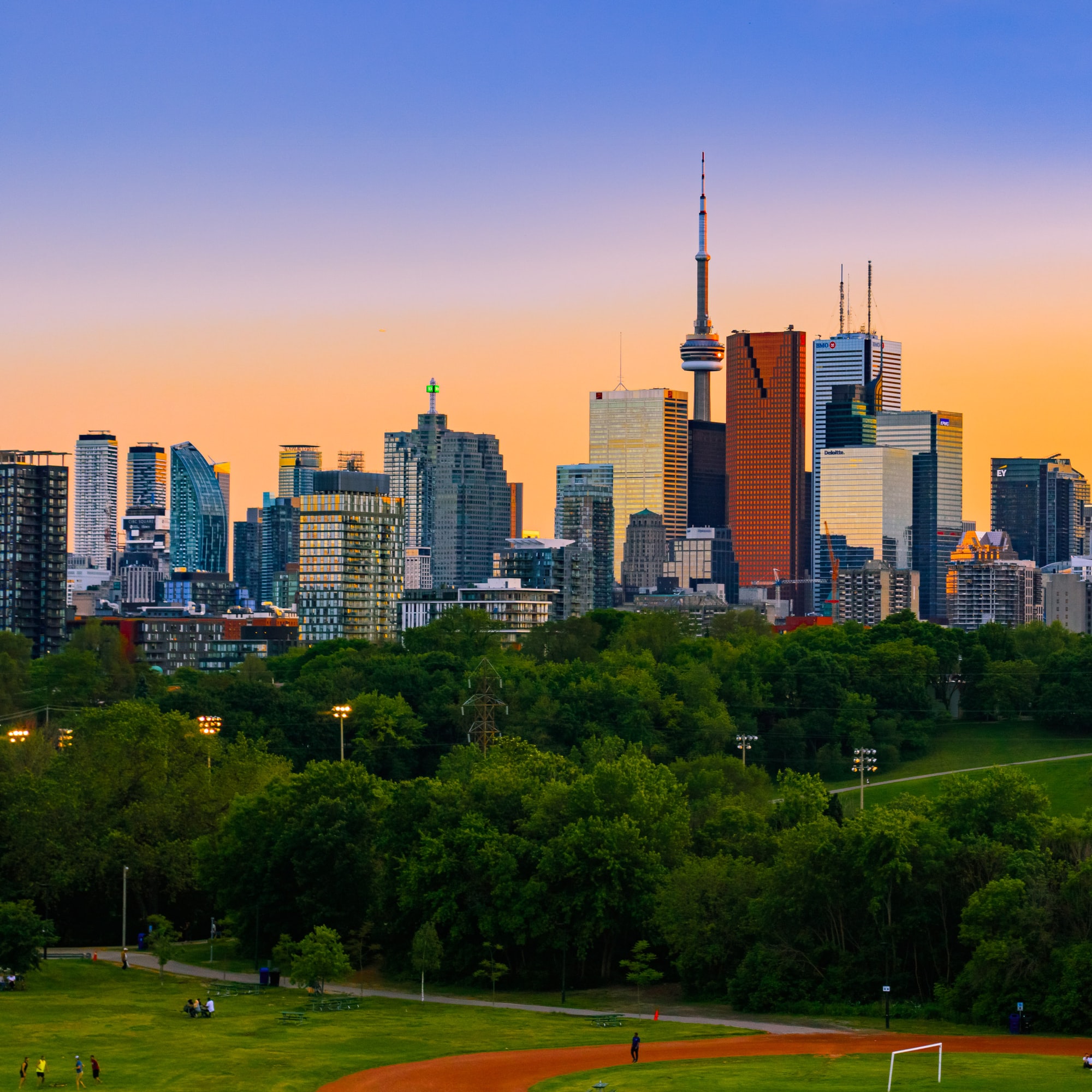
If you are moving to the Greater Toronto Area, or moving within it, one of the first decisions you will face is geography. In local shorthand, that question sounds like this: do you want the 416 or the 905?
The 416 is the City of Toronto. The 905 is everything surrounding it, the ring of municipalities that includes Vaughan, Mississauga, Brampton, Oakville, Markham, Richmond Hill, Milton, and dozens of smaller communities. The names come from telephone area codes, but the distinction runs deeper than that. They represent two different ways of living in the same metropolitan area.
What the prices look like
In September 2026, the average sale price across all property types in the City of Toronto was $1,034,320. In York Region, which includes Vaughan, Richmond Hill, Markham, Aurora and Newmarket, it was $1,136,650.
That headline comparison is misleading, because the housing mix is different. Toronto's sales are heavily weighted toward condominiums. York Region's are weighted toward detached and semi-detached homes. Comparing averages across different product types tells you very little.
A more useful comparison is by property type. In Toronto, condos averaged $640,248. In Vaughan, condos averaged $548,958. For detached homes, Vaughan averaged $1,599,218, while the City of Toronto average depends heavily on which district you are looking at, and ranges from under $1 million in parts of Scarborough to well over $2 million in the central districts.
Source: TRREB Market Watch, September 2026.
Space and property type
The 416 offers density. Condominiums, mid-rise apartments, townhouses and semi-detached homes make up the majority of the housing stock in most Toronto neighbourhoods. Detached homes on proper lots exist, but they are concentrated in specific areas and priced accordingly.
The 905 offers space. Detached homes with garages, backyards and driveways are the norm in most 905 communities. Lot sizes are larger. New-build developments in the outer suburbs offer the largest homes at the lowest price per square foot, though you pay for that space with a longer commute.
If you need four bedrooms, a double garage and a garden for the children, the 905 gives you far more options at a lower price point than the 416. If you want to walk to restaurants, transit and work, the 416 is where that lifestyle lives.
The commute question
Commute times are the single biggest lifestyle difference between the 416 and the 905. If you work in downtown Toronto and live in Vaughan, expect 45 to 75 minutes each way by car, depending on the time of day and the route. The Toronto-York Spadina subway extension reaches Vaughan Metropolitan Centre, which helps if your home is near that station and your office is near a subway stop downtown.
GO Transit serves most 905 communities with bus and train service into Union Station. Travel times range from 30 minutes on the Lakeshore lines to over an hour from the outer reaches of the network. Service frequency varies. Some routes run every 15 minutes during peak hours. Others run once an hour.
If you work remotely, or if your office is in the 905 itself, the commute calculation changes entirely. Many of the technology, logistics and professional services employers in the GTA are located in Markham, Mississauga, Vaughan and Oakville. Living and working in the 905 can mean a 15-minute drive to the office.
Schools and community
Both the 416 and the 905 have strong public school systems. The Fraser Institute publishes annual school rankings, and high-performing schools appear in both areas. Families who prioritise schools tend to research specific schools rather than broad regions, which is the right approach. A top-rated school in Vaughan and a top-rated school in midtown Toronto are both excellent options. The question is which neighbourhood fits your broader needs.
Community character differs. Established 416 neighbourhoods often have walkable main streets with independent shops, restaurants and services. Newer 905 subdivisions are typically car-dependent, with commercial activity concentrated in plazas and shopping centres along arterial roads. Older 905 town centres, like those in Oakville, Richmond Hill or Unionville, have more of the village-centre feel.
Property taxes
Municipal property tax rates vary across the GTA. Toronto's residential tax rate is among the lowest in the region, but that does not necessarily mean a lower tax bill, because assessed property values in Toronto are often higher. A $1.5 million home in Toronto may generate a similar tax bill to a $1.5 million home in Vaughan, despite the different rates, because the rate and the assessment work together.
What differs more noticeably is what you get for those taxes. Toronto has an extensive public transit system, a network of community centres and libraries, and a wide range of municipal services. Smaller 905 municipalities may have fewer services but also fewer demands on the tax base.
Questions to ask yourself
Where will you be commuting to, and how often? What property type do you need? What is your price range, and what does it buy in each area? Do you prefer a walkable urban neighbourhood or a quieter suburban street? Are you planning to stay for five years or fifteen?
The answers are personal. There is no objectively better choice between the 416 and the 905. There is only the choice that fits your life.
If you want to compare specific neighbourhoods in Toronto, Vaughan, King City or the surrounding communities, call me at 416-560-4983. I have been selling in this market for thirty years and I can walk you through what each area actually offers at your budget.